Premium Ceramic Crucibles | High-Performance Lab & Industrial Solutions


PRODUCT PARAMETERS
Description
Overview of Corundum Crucible
Corundum crucibles, made from alumina (Al₂O₃), are highly valued for their exceptional thermal resistance and chemical stability. These crucibles are ideal for high-temperature applications, such as melting and annealing processes in laboratories and industrial settings. Corundum crucibles can withstand temperatures up to 1800°C and are resistant to most chemical reagents, making them indispensable in various scientific and manufacturing operations.
Features of Corundum Crucible
High Thermal Resistance: Can withstand temperatures up to 1800°C without degrading.
Chemical Stability: Resistant to most acids and alkalis, ensuring minimal contamination during experiments or production.
Durability: Extremely durable and long-lasting, even under harsh conditions.
Non-Reactive: Does not react with the materials being processed, preserving sample purity.
Versatility: Suitable for a wide range of applications including melting metals, glass, and ceramics.
Precision Engineering: Manufactured to tight tolerances for consistent performance and reliability.

(Al2o3 Ceramic Corundum Alumina Crucible for Metal Melting in Laboratory)
Specification of Al2o3 Ceramic Corundum Alumina Crucible for Metal Melting in Laboratory
This alumina ceramic crucible melts metals in demanding lab settings. Its composition is over 99.7% pure Al2O3 (aluminum oxide). This high purity provides excellent chemical resistance. The crucible withstands harsh acids and molten metals without reacting. This purity prevents contamination of your melt.
The crucible uses a dense corundum structure. This structure delivers exceptional thermal stability. It handles extreme heat up to 1800°C (3272°F) safely. The material resists thermal shock well. Rapid temperature changes won’t easily crack it. This is vital for repeated heating and cooling cycles.
Its construction is robust. The crucible endures physical wear and mechanical stress. It won’t deform under high temperatures. This ensures reliable performance over many uses. You get a long service life even with frequent thermal cycling.
Standard shapes are cylindrical with a flat base. Some models have a pouring spout. This design allows easy pouring of molten metal. It minimizes spills and waste. Crucible capacities range widely. Small sizes hold 5ml or 10ml. Larger sizes handle 1000ml, 2000ml, even 5000ml. Choose the size matching your metal volume.
The crucible works for melting various metals. It handles precious metals like gold, silver, and platinum. It also works for copper, aluminum, and their alloys. Its inert nature keeps the melt pure. This is crucial for accurate analysis and alloy development. The smooth interior surface aids in clean metal release. Residue buildup is minimal after pouring. This simplifies cleaning between melts.

(Al2o3 Ceramic Corundum Alumina Crucible for Metal Melting in Laboratory)
Applications of Al2o3 Ceramic Corundum Alumina Crucible for Metal Melting in Laboratory
Alumina ceramic crucibles are essential tools for metal melting in labs. These crucibles are made from high purity aluminum oxide. This material is very strong and handles extreme heat well. It easily withstands temperatures over 1700°C. This is hotter than most metals melt. The crucible won’t melt or degrade itself. It keeps its shape under intense heat. This is critical for consistent results.
Chemical resistance is another major benefit. The alumina material doesn’t react with most molten metals. It won’t contaminate your sample. You get pure metal after melting. This purity is vital for accurate analysis. Impurities ruin experiments. The crucible also resists acids and alkalis. Cleaning is easier after use.
Thermal shock resistance is important too. Labs heat and cool things quickly sometimes. A cheap crucible might crack. Alumina crucibles handle rapid temperature changes much better. They won’t crack easily when heated fast or cooled down. This makes them reliable and long-lasting. You save money by not replacing them often.
These properties make alumina crucibles perfect for many lab tasks. They are ideal for melting pure metals like gold, silver, copper, or aluminum. They work well for creating small alloys. Researchers use them to test new metal mixtures. They are excellent for preparing precise metal samples for analysis. Crucibles are used in furnaces for casting small shapes. They are also used for ash testing materials at high temperatures. Handling is straightforward. Their smooth surface lets molten metal pour cleanly. You avoid losing valuable material.
Company Introduction
Welcome to Teen-Hot,a leading global supplier of high-quality crucibles designed for various industrial applications. We offer an extensive range of crucibles, including graphite, ceramic, and metal varieties, tailored to meet the needs of foundries, laboratories, and manufacturers. Our products are renowned for their durability, thermal resistance, and precision engineering, ensuring optimal performance in melting and heat treatment processes. With advanced manufacturing facilities and a commitment to excellence, we provide reliable, cost-effective solutions worldwide. Partner with us for your crucible needs and experience superior quality, expert support, and timely delivery.
If you have any questions, please feel free to contact us(nanotrun@yahoo.com).
Payment Methods
T/T, Western Union, Paypal, Credit Card etc.
Shipment Methods
By air, by sea, by express, as customers request.
5 FAQs of Al2o3 Ceramic Corundum Alumina Crucible for Metal Melting in Laboratory
Here are 5 common questions about Al2O3 Ceramic Corundum Alumina Crucibles for lab metal melting:
What’s the highest temperature these crucibles handle?
These crucibles resist very high heat. They safely work up to 1750°C. This covers most common lab metal melting jobs. Check the specific crucible’s rating. Never exceed the maker’s maximum temperature.
Can I melt any metal in them?
No. They handle many metals like gold, silver, copper, brass, and platinum. But avoid metals reacting with alumina. This includes titanium, zirconium, hafnium. Also avoid strong alkaline metals like sodium. These metals damage the crucible.
Will they crack from sudden temperature changes?
Alumina crucibles handle thermal shock better than porcelain. They are still brittle ceramic. Avoid extreme, rapid temperature swings. Heat and cool them gradually. Don’t plunge a hot crucible into cold water. This reduces cracking risk.
How long do these crucibles typically last?
Lifespan varies a lot. It depends on the metals melted, the temperatures used, and how carefully you handle them. With proper care melting suitable metals, they last many uses. Rough handling or wrong metals shortens their life fast. Inspect for cracks before each use.
How do I clean an alumina crucible after melting?
Let the crucible cool completely first. Remove leftover metal slag carefully. Use appropriate tools like tongs or a small chisel. Avoid scraping the crucible walls hard. You can use dilute acid washes for tough residue. Rinse thoroughly with water after cleaning. Ensure it’s completely dry before reheating.

(Al2o3 Ceramic Corundum Alumina Crucible for Metal Melting in Laboratory)
REQUEST A QUOTE
RELATED PRODUCTS
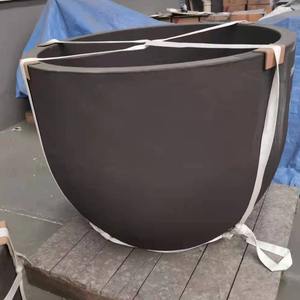
KERUI High Temperature Resistance Corundum Crucible With Withstand 1800 Degres Or More
Square alumina crucible with lid Tube furnace ark porcelain boat corundum Electric furnace high temperature laboratory ark
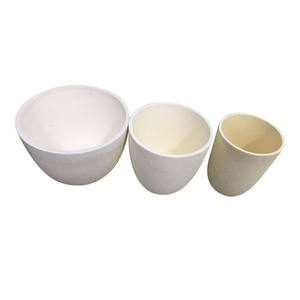
Alumina Ceramic Sagger Corundum Crucible/ultra-high Temperature Ceramic/factory Direct ing Industrial Ceramic

High 99 Alumina corundum ceramic crucible

99% Alumina Corundum Semi-Round Boat for Crucible Boat Tube Furnace Porcelain Boat Hole Customizable 25mm Diameter OEM Support
