Premium Ceramic Crucibles | High-Performance Lab & Industrial Solutions

Key takeaways
- HPBN crucibles are high-density ceramics made by hot pressing, ideal for crystal pulling.
- They offer high purity, thermal shock resistance, chemical inertness, low thermal expansion, and non-wetting.
- Used in Czochralski process for growing silicon, GaAs, and other semiconductor crystals.
- Selection criteria include purity grade, dimensional tolerance, and supplier quality.
What Is a Hot Pressed Boron Nitride Crucible?
A hot pressed boron nitride (HPBN) crucible is a high-density ceramic container made by hot pressing, a process that applies heat and pressure to boron nitride powder simultaneously. This produces a nearly fully dense, isotropic material with a fine, uniform grain structure.
The crucible is specifically engineered for crystal pulling applications, including the Czochralski process. It holds the molten charge (e.g., silicon, gallium arsenide) from which a single crystal is grown. The crucible must withstand extreme temperatures, resist thermal shock, and maintain chemical purity throughout the growth run.
HPBN crucibles provide a clean, non-contaminating environment for the melt. Hot pressing eliminates pores and reduces impurities, ensuring that the crucible itself does not introduce defects into the growing crystal.
| Property | Description |
|---|---|
| High Purity | Minimizes contamination risk during crystal growth. |
| Thermal Shock Resistance | Withstands rapid heating and cooling cycles without cracking. |
| Chemical Inertness | Does not react with molten semiconductors or oxides. |
| Low Thermal Expansion | Maintains dimensional stability at high temperatures. |
| Non-Wetting | Prevents melt adhesion, facilitating easy crucible emptying. |
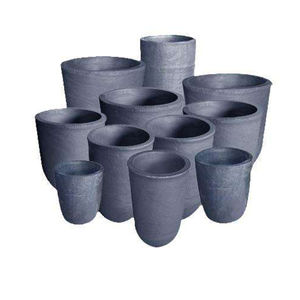
Key Properties That Benefit Crystal Pulling
High purity is a critical attribute of HPBN crucibles. The hot pressing process minimizes residual impurities, which is essential for semiconductor crystal growth where even trace contaminants can degrade electrical properties.
Thermal shock resistance allows the crucible to survive rapid heating and cooling cycles without cracking. This is vital because crystal pulling often involves repeated thermal ramps during setup and cool-down.
Chemical inertness means HPBN does not react with molten semiconductors, oxides, or salts. Combined with a non-wetting surface, this prevents the melt from sticking to the crucible wall, reducing the risk of crystal defects and simplifying cleaning.
Low thermal expansion and high thermal conductivity contribute to uniform heat distribution within the melt. The crucible helps maintain the stable temperature gradient required for controlled crystal growth.
Application in the Czochralski Process
In the Czochralski (CZ) method, the crucible holds the molten raw material, typically several hundred degrees above its melting point. A seed crystal is dipped into the melt and slowly withdrawn, forming a single crystal ingot. The crucible must not dissolve or react with the melt, as any interaction would alter the composition.
HPBN crucibles excel in this role because they do not introduce contaminants. For example, when pulling silicon crystals, the crucible interacts minimally with the melt, preserving the controlled doping profile. Their dimensional stability under thermal load ensures consistent meniscus geometry during growth.
The non-wetting characteristic helps achieve clean separation between the crystal and the crucible after melting. This reduces the amount of residual material stuck to the crucible wall, extending the crucible’s useful life in multi-run production environments.
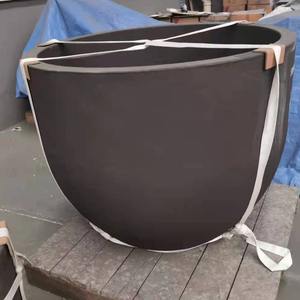
Comparison with Other Crucible Materials
Quartz crucibles are the traditional choice for silicon pulling, but they soften near the melting point of silicon and can devitrify, leading to particle shedding. HPBN crucibles maintain strength at these temperatures and do not devitrify, offering a longer service life.
Graphite crucibles provide good thermal conductivity but can react with many molten materials, especially oxygen-containing melts. HPBN’s chemical inertness makes it suitable for reactive materials like GaAs or InP that would attack graphite.
Hot pressed silicon nitride crucibles offer similar thermal stability but typically operate at lower maximum temperatures compared to HPBN. For very high-temperature pulling of compounds or oxides, HPBN is preferred due to its higher thermal resistance and purity.
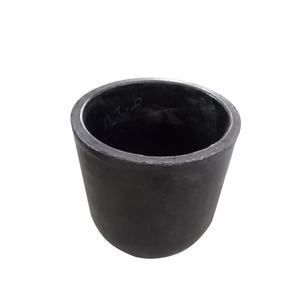
Selecting the Right HPBN Crucible
When choosing an HPBN crucible for crystal pulling, consider the purity grade required for the specific material being grown. Higher purity grades are essential for electronic-grade silicon and compound semiconductors.
Dimensional tolerance and consistency are important for fitting existing pulling equipment. Many manufacturers offer custom sizes and shapes, including walls with uniform thickness to minimize thermal gradients.
The density and grain structure, controlled by the hot pressing parameters, affect thermal shock resistance and strength. Reputable suppliers provide material data sheets that specify these properties, enabling engineers to select the optimal grade for their process.
Conclusion
Hot pressed boron nitride crucibles are a proven solution for crystal pulling and the Czochralski process, offering a combination of high purity, thermal shock resistance, chemical inertness, and dimensional stability. These properties help semiconductor manufacturers produce high-quality single crystals with fewer defects and longer crucible life.
While not the only crucible material available, HPBN occupies a critical niche for applications where purity and inertness are paramount. As crystal growth technology advances, the demand for reliable, high-performance crucibles like HPBN is expected to continue growing.
Frequently asked questions
Why is hot pressed boron nitride preferred over quartz for some crystal pulling applications?
HPBN offers superior thermal shock resistance and chemical inertness, especially for reactive melts like gallium arsenide. It does not devitrify over time, providing longer service life compared to quartz.
Can HPBN crucibles be used for oxide crystal growth (e.g., sapphire)?
Yes, HPBN can be used for non-reactive oxide melts, though alternative materials such as iridium are often chosen for very high-temperature oxide growth. The selection depends on the specific material and temperature.
How should HPBN crucibles be handled and stored?
They should be handled with care to avoid chipping and stored in a dry, clean environment to prevent moisture absorption, which could affect performance.
Are HPBN crucibles available in custom sizes?
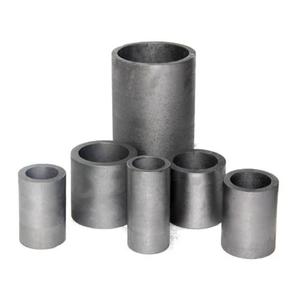
Yes, manufacturers can produce crucibles in various shapes and dimensions to fit specific pulling equipment requirements. Custom orders often involve specifying wall thickness, outer diameter, and height.
.
