Premium Ceramic Crucibles | High-Performance Lab & Industrial Solutions


PRODUCT PARAMETERS
Description
Overview of Mullite Crucible
Mullite crucibles are made from a high-performance ceramic material composed primarily of alumina (Al₂O₃) and silica (SiO₂). Known for their excellent thermal stability and mechanical strength, mullite crucibles are widely used in high-temperature applications such as melting metals, glass, and ceramics. They offer superior resistance to thermal shock and chemical attack, making them indispensable in both laboratory and industrial settings.
Features of Mullite Crucible
Thermal Shock Resistance: Exceptional ability to withstand rapid temperature changes without cracking.
High Mechanical Strength: Strong and durable, even at elevated temperatures.
Chemical Stability: Resistant to most chemicals, ensuring minimal contamination during processes.
Temperature Range: Can operate effectively at temperatures up to 1650°C.
Low Thermal Expansion: Minimal expansion or contraction with temperature changes, ensuring dimensional stability.
Non-Reactive: Does not react with the materials being processed, preserving sample purity.
Versatility: Suitable for a wide range of applications including metallurgy, glass manufacturing, and laboratory experiments.

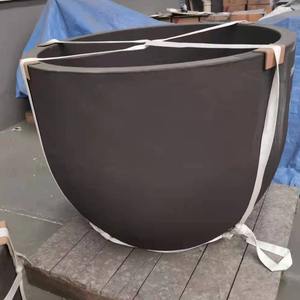
(Abrasive Resistance Silicon Carbide SIC Ceramic crucible)
Specifications of Abrasive Resistance Silicon Carbide SIC Ceramic crucible
This crucible resists abrasion effectively. It is made from silicon carbide (SiC), a material known for hardness and durability. The structure is dense, reducing wear from rough materials. It handles high heat, operating in temperatures up to 1650°C. Thermal shock resistance prevents cracking during rapid temperature shifts. The surface stays smooth even after repeated use, minimizing contamination risks. Chemical stability ensures it works with acids, alkalis, and molten metals. Oxidation resistance maintains performance in oxygen-rich environments.
The crucible’s high thermal conductivity spreads heat evenly. This speeds up melting processes and saves energy. Mechanical strength allows it to bear heavy loads without breaking. Its design resists deformation under stress, ensuring long-term reliability. The material’s purity prevents unwanted reactions with samples, ideal for labs and industrial applications.
Manufacturing uses advanced sintering methods, creating a uniform microstructure. This enhances toughness and extends service life. Custom sizes and shapes are available to fit specific furnace setups. The product suits metal melting, foundries, and chemical processing. It outperforms traditional clay or graphite crucibles in harsh conditions.
Maintenance is simple. Residue removal requires basic cleaning tools. The crucible’s non-porous surface stops material buildup. Regular inspections detect minor wear early. Proper handling reduces accidental damage. Storage in dry areas prevents moisture-related issues.
Cost efficiency comes from extended usability. Fewer replacements lower long-term expenses. Compatibility with induction and gas furnaces adds versatility. Users report consistent results across cycles. Testing meets industry standards for quality assurance. Safety features reduce workplace hazards.
Customization options include reinforced edges or added coatings. These adapt the crucible for specialized tasks. Technical support helps select the right model. Bulk orders are available for large-scale operations. Packaging ensures safe delivery worldwide.

(Abrasive Resistance Silicon Carbide SIC Ceramic crucible)
Applications of Abrasive Resistance Silicon Carbide SIC Ceramic crucible
Abrasion-resistant silicon carbide (SiC) ceramic crucibles handle extreme conditions in industrial settings. These crucibles work well in high-temperature processes. They keep their shape under thermal stress. This makes them reliable for repeated use. Industries like metallurgy, chemicals, and electronics rely on them.
Metal melting uses SiC crucibles often. They withstand temperatures above 1600°C. This suits melting metals like aluminum, copper, and alloys. The material resists chemical reactions with molten metals. This prevents contamination. Furnace operators prefer them for consistent performance.
Chemical processing needs durable tools. SiC crucibles manage corrosive substances. Acids, alkalis, and salts do not damage them easily. Labs use them for experiments involving aggressive chemicals. Their non-reactive surface keeps samples pure. This reduces errors in test results.
Semiconductor production requires precision. SiC crucibles hold raw materials during crystal growth. They handle high heat without warping. This ensures uniform crystal structures. Manufacturers save costs by avoiding frequent replacements.
Glassmaking uses these crucibles for melting raw materials. The process involves prolonged exposure to heat. SiC maintains stability over time. This prevents impurities from entering the glass. The result is higher-quality glass products.
Energy sectors apply SiC crucibles in high-stress environments. They work in systems like solar cell production or nuclear reactors. Their radiation resistance adds to their versatility. This extends their use beyond traditional industries.
Mining operations benefit from their wear resistance. Crushing and grinding processes create abrasive conditions. SiC crucibles endure particle impact without cracking. This reduces downtime for maintenance.
Handling molten salts is another key application. Solar thermal energy storage uses molten salts for heat transfer. SiC crucibles store these salts safely. They resist thermal shock during rapid temperature changes.
Food processing equipment sometimes uses SiC components. High-temperature sterilization needs reliable materials. The crucibles meet hygiene standards. They do not react with food ingredients.
Automotive testing labs use SiC crucibles for analyzing engine materials. They simulate extreme heat conditions. This helps in developing heat-resistant parts.
The crucibles also serve in aerospace research. Testing materials for spacecraft requires tools that mimic space conditions. SiC’s stability under vacuum and heat makes it suitable.
Durability defines SiC ceramic crucibles. Their resistance to wear, heat, and chemicals suits diverse tasks. Industries choose them for long-term cost savings. Performance remains consistent even after heavy use.
Company Introduction
Welcome to Teen-Hot,a leading global supplier of high-quality crucibles designed for various industrial applications. We offer an extensive range of crucibles, including graphite, ceramic, and metal varieties, tailored to meet the needs of foundries, laboratories, and manufacturers. Our products are renowned for their durability, thermal resistance, and precision engineering, ensuring optimal performance in melting and heat treatment processes. With advanced manufacturing facilities and a commitment to excellence, we provide reliable, cost-effective solutions worldwide. Partner with us for your crucible needs and experience superior quality, expert support, and timely delivery.
If you have any questions, please feel free to contact us(nanotrun@yahoo.com).
Payment Methods
T/T, Western Union, Paypal, Credit Card etc.
Shipment Methods
By air, by sea, by express, as customers request.
5 FAQs of Abrasive Resistance Silicon Carbide SIC Ceramic crucible
Abrasive Resistance Silicon Carbide SIC Ceramic Crucible FAQs
What is an Abrasive Resistance SIC Ceramic Crucible?
This crucible is made from silicon carbide. It resists wear, heat, chemical reactions. It handles tough industrial tasks like melting metals, chemical processing. The material is strong, durable.
How much heat can this crucible handle?
It works in temperatures up to 1600°C. It stays stable in extreme heat. It beats materials like alumina or graphite. It resists cracking from sudden temperature changes.
What makes this crucible good against abrasion?
Silicon carbide has a hard structure. It forms strong atomic bonds. Rough materials like metal slag or grinding media cause less damage. It lasts longer in harsh conditions.
How long does the crucible last?
Lifespan depends on use. High temperatures, abrasive materials, cooling cycles affect it. Proper care makes it outlast cheaper options. It costs less over time despite a higher initial price.
How to maintain the crucible?
Clean it after each use. Remove leftover materials. Avoid dropping it. Let it cool slowly. Check for cracks before heating. Store it dry. Follow guidelines to keep it working well.

(Abrasive Resistance Silicon Carbide SIC Ceramic crucible)
REQUEST A QUOTE
RELATED PRODUCTS
High temperature alumina combustion ceramic crucible 50ml

Super quality Special Ceramic refractory Crucibles For Melting Furnace Sagger
Small Graphite Crucibles For Melting Copper

Alumina Ceramic Crucible in Furnace or Kiln

XTL Sintyron High Pure Zirconia crucible For Melting Platinum