Premium Ceramic Crucibles | High-Performance Lab & Industrial Solutions


PRODUCT PARAMETERS
Description
Overview of Mullite Crucible
Mullite crucibles are made from a high-performance ceramic material composed primarily of alumina (Al₂O₃) and silica (SiO₂). Known for their excellent thermal stability and mechanical strength, mullite crucibles are widely used in high-temperature applications such as melting metals, glass, and ceramics. They offer superior resistance to thermal shock and chemical attack, making them indispensable in both laboratory and industrial settings.
Features of Mullite Crucible
Thermal Shock Resistance: Exceptional ability to withstand rapid temperature changes without cracking.
High Mechanical Strength: Strong and durable, even at elevated temperatures.
Chemical Stability: Resistant to most chemicals, ensuring minimal contamination during processes.
Temperature Range: Can operate effectively at temperatures up to 1650°C.
Low Thermal Expansion: Minimal expansion or contraction with temperature changes, ensuring dimensional stability.
Non-Reactive: Does not react with the materials being processed, preserving sample purity.
Versatility: Suitable for a wide range of applications including metallurgy, glass manufacturing, and laboratory experiments.

(High Temperature Resistant Al2O3 Alumina Ceramic Crucible)
Specifications of High Temperature Resistant Al2O3 Alumina Ceramic Crucible
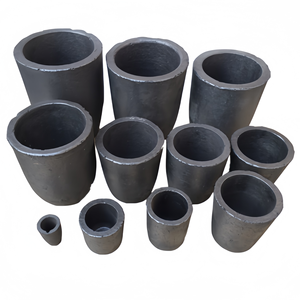
This crucible holds things for melting. It handles hot temperatures well. Alumina ceramic makes it. Alumina means aluminum oxide. Al2O3 is the chemical name. This material is very pure. It is over 99% Al2O3. This purity is important. It gives the crucible strength. It makes the crucible last longer. High heat does not break it easily. The crucible works at temperatures up to 1800 degrees Celsius. That is very hot. It stays strong at these heats. The crucible does not melt. It does not crack suddenly. This makes it safe. You can use it again and again. The ceramic resists chemicals too. Acids do not damage it much. Bases also do not harm it easily. This is good for chemical work. The crucible is dense inside. This density stops liquids from leaking. It keeps your sample pure. The crucible has smooth surfaces. This smoothness stops things from sticking. Cleaning is easier later. You can find many sizes. Small sizes hold a few grams. Large sizes hold several kilograms. Shapes include cone, boat, or cylinder. The crucible cools down slowly. Fast cooling can cause cracks. Let it cool slowly after heating. Use it in labs or factories. It melts metals like gold or silver. It melts minerals for testing. It heats chemicals without reacting.

(High Temperature Resistant Al2O3 Alumina Ceramic Crucible)
Applications of High Temperature Resistant Al2O3 Alumina Ceramic Crucible
Alumina ceramic crucibles are made from Al2O3. This material handles extreme heat very well. They are essential tools in many demanding settings. Their high temperature resistance is key. These crucibles don’t melt easily. They stay strong under intense heat. This makes them perfect for melting metals. Foundries and metal research labs use them often. They hold molten iron, steel, copper, and precious metals. The crucible contains the liquid metal safely. It doesn’t react badly with the melt.
Chemical laboratories rely on these crucibles too. Scientists use them for heating chemicals. They perform tests requiring high temperatures. The crucibles hold acids, salts, and other reactive materials. Alumina resists chemical attack well. This keeps experiments pure. It prevents unwanted contamination. Results stay accurate.
Growing crystals needs controlled, hot conditions. Alumina crucibles are common here. They hold the material that forms the crystal. The crucible provides a stable, clean container. It withstands the long heating times. Crucible quality directly affects crystal purity.
Material testing labs use alumina crucibles frequently. They analyze how substances change with heat. Tests like thermogravimetric analysis need inert containers. Alumina crucibles work well for this. They don’t interfere with the measurements. They provide reliable data on material behavior.
Industrial processes involving heat treatment use these crucibles. They hold parts or materials during sintering or annealing. The crucibles endure repeated heating cycles. They offer long service life even under tough conditions. This saves money and downtime.
Company Introduction
Welcome to Teen-Hot,a leading global supplier of high-quality crucibles designed for various industrial applications. We offer an extensive range of crucibles, including graphite, ceramic, and metal varieties, tailored to meet the needs of foundries, laboratories, and manufacturers. Our products are renowned for their durability, thermal resistance, and precision engineering, ensuring optimal performance in melting and heat treatment processes. With advanced manufacturing facilities and a commitment to excellence, we provide reliable, cost-effective solutions worldwide. Partner with us for your crucible needs and experience superior quality, expert support, and timely delivery.
If you have any questions, please feel free to contact us(nanotrun@yahoo.com).
Payment Methods
T/T, Western Union, Paypal, Credit Card etc.
Shipment Methods
By air, by sea, by express, as customers request.
5 FAQs of High Temperature Resistant Al2O3 Alumina Ceramic Crucible
What temperature can Alumina Ceramic Crucibles handle?
Alumina ceramic crucibles resist very high temperatures. They withstand temperatures up to 1700°C. This high limit makes them suitable for melting metals. It also works for firing ceramics or sintering materials. These crucibles perform reliably at extreme heat.
What is the main material?
The crucible is made from Al2O3. Al2O3 is alumina. Alumina is aluminum oxide. This material provides excellent heat resistance. It also gives good mechanical strength. High-purity alumina offers the best performance. The purity level directly affects temperature capability.
Do they resist chemicals?
Yes, alumina crucibles resist many chemicals. They show strong resistance to acids. They also handle alkalis well. This makes them useful in chemical labs. You can use them with various molten salts. They are not suitable for hydrofluoric acid. Hydrofluoric acid attacks alumina.
Can they handle sudden temperature changes?
Alumina crucibles manage thermal shock better than some ceramics. They are still brittle. Avoid heating or cooling them too quickly. Fast changes can cause cracks. Preheat the crucible slowly. Let it cool down gradually after use. This practice extends its life.
How do you clean them?
Cleaning depends on the residue. Remove loose material first. Use a soft brush. For tougher residues, soak the crucible. Use a suitable chemical solution. Avoid harsh scrubbing. Scrubbing can damage the surface. Sometimes high-temperature firing cleans stubborn residues. Always handle the crucible carefully.

(High Temperature Resistant Al2O3 Alumina Ceramic Crucible)
REQUEST A QUOTE
RELATED PRODUCTS

High Purity 99% Al203 Alumina Zirconia Ceramic Sagger Refractory Ceramic Crucible Pot Cutting Mullite Cordierite Aluminium MGO

Al2O3 99 high temperature refractory alumina melting ceramic crucible mullite crucible
XTL Sintyron Large Size White Zirconia Zro2 Material Grinding Ceramic Sintering crucible For Melting
Al2O3 99 high temperature refractory alumina melting ceramic crucible mullite crucible
High temperature alumina combustion ceramic crucible 50ml
