Premium Ceramic Crucibles | High-Performance Lab & Industrial Solutions

Oxidation Resistant Silicon Carbide Crucible for Continuous Use at 1500°C: A Comprehensive Guide
What Is an Oxidation Resistant Silicon Carbide Crucible?
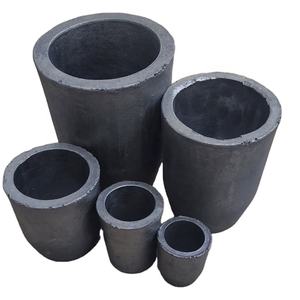
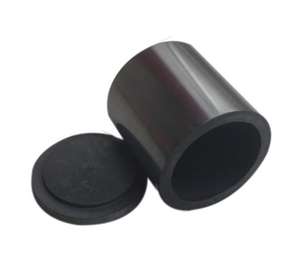
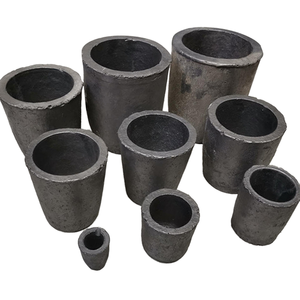
An oxidation resistant silicon carbide crucible is a container designed for prolonged exposure to temperatures up to 1500°C in oxidizing environments, maintaining structural integrity and chemical stability. Unlike conventional crucibles that degrade or react with oxygen at high temperatures, this type leverages silicon carbide's properties: high thermal conductivity, hardness, and thermal shock resistance. The term "oxidation resistant" refers to the material's ability to form a protective silica layer on its surface when exposed to oxygen, which blocks further oxidation and extends service life. This makes it suitable for continuous use applications that require consistent performance.
The crucible is typically manufactured via reaction bonding, sintering, or recrystallization to optimize density and purity. The result is low porosity, high mechanical strength, and resistance to corrosion from molten metals, slags, and aggressive chemicals. For continuous operation at 1500°C, the crucible design must balance thermal expansion, thermal conductivity, and oxidation resistance. This section defines the crucible's purpose and sets the foundation for exploring its properties and applications.
Material Properties Enabling High-Temperature Oxidation Resistance
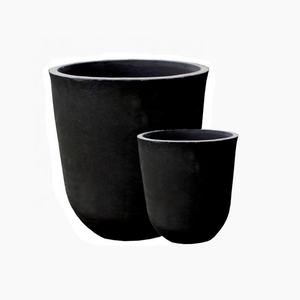
Silicon carbide (SiC) is a compound of silicon and carbon with strong covalent bonds, giving it a high melting point (≈2700°C) and excellent thermal stability. At elevated temperatures, SiC reacts with oxygen to form a thin, dense layer of silicon dioxide (SiO2) on its surface. This passive layer acts as a diffusion barrier, slowing further oxidation. Continuous use at 1500°C depends on the stability of this SiO2 layer: it remains protective as long as the temperature stays below the melting point of silica (≈1713°C) and the environment is not excessively reducing or alkaline. The oxidation rate is extremely low, typically micrometers per year, ensuring long-term durability.
In addition, silicon carbide has high thermal conductivity (up to 120 W/m·K), which distributes heat evenly and reduces thermal stress. Its low coefficient of thermal expansion minimizes cracking during repeated heating and cooling. Mechanical strength at 1500°C remains substantial, often exceeding 200 MPa in flexural strength for dense grades. These properties make silicon carbide superior to many other refractory materials for high-temperature, oxidizing environments. The material also resists attack from most molten non-ferrous metals (e.g., aluminum, copper, zinc) and corrosive slags and fluxes.

Conditions Required for Continuous Use at 1500°C
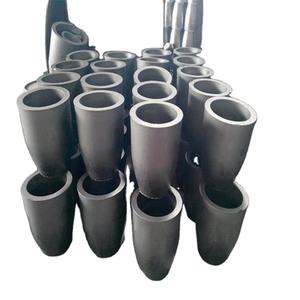
To achieve reliable continuous operation at 1500°C, several conditions must be met regarding crucible design, operating environment, and handling. The crucible should be heated gradually to avoid thermal shock, especially during first use. Preheating to 200–300°C for a few hours removes absorbed moisture. The furnace atmosphere should be oxidizing or neutral; strongly reducing atmospheres (e.g., carbon monoxide, hydrogen) can degrade the protective silica layer, accelerating oxidation. In vacuum or inert gas, additional precautions prevent silicon carbide decomposition.
Wall thickness must provide mechanical strength while allowing efficient heat transfer; typical values range from 5 mm to 20 mm depending on size and application. Support structures should avoid point loads that could cause cracking. For continuous use, maintain temperature within ±10°C of setpoint to minimize thermal cycling. Frequent temperature fluctuations reduce lifespan due to fatigue. Stable placement in the furnace prevents tilting or spillage. Under these conditions, a high-quality crucible can operate for hundreds or thousands of hours at 1500°C.
Key Applications in Industry
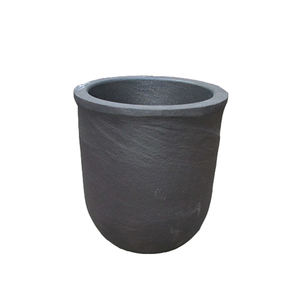
Oxidation resistant silicon carbide crucibles are used in industries requiring high-temperature processing under oxidizing conditions. One primary application is melting and holding non-ferrous metals, especially aluminum and its alloys, where the crucible must resist oxidation and corrosion from molten metal and fluxes. High thermal conductivity speeds up melting cycles, improving energy efficiency. Another application is in specialty glass and ceramic production, where crucibles must withstand aggressive molten media and thermal shock without contamination.
In chemical analysis and materials research, these crucibles are used for ashing, sintering, and high-temperature reactions requiring a clean, inert environment. Their oxidation resistance suits processes involving combustion or calcination in air. They are also employed in advanced ceramic production (e.g., alumina, zirconia) as containment vessels for high-temperature firing. The ability to operate continuously at 1500°C in air without significant degradation is a decisive advantage over graphite crucibles (which oxidize rapidly above 600°C) and alumina crucibles (which may suffer thermal shock or chemical attack).
https://www.teen-hot.com/blog/aln-ceramic-crucible-for-molten-metal-handling-and-nonferrous-alloys/
Comparison with Other Crucible Materials
When selecting a crucible for continuous high-temperature use, silicon carbide offers a unique balance of properties compared to graphite, alumina, quartz, and mullite. Graphite crucibles are excellent in vacuum or inert atmospheres but oxidize rapidly in air above 600°C, making them unsuitable for continuous use at 1500°C in oxidizing environments. Alumina (Al2O3) crucibles can withstand up to 1900°C but have lower thermal shock resistance and may react with some molten metals or fluxes. Mullite crucibles offer good thermal stability but are more porous and less resistant to chemical attack than dense silicon carbide.
Quartz crucibles are limited to about 1200°C for continuous use and are prone to devitrification. Silicon carbide crucibles combine high thermal conductivity, low thermal expansion, and excellent oxidation resistance, making them preferred for demanding applications in air. They are also more cost-effective than platinum or other precious metal crucibles. For continuous operation at 1500°C in an oxidizing atmosphere, silicon carbide is often the optimal material when properly manufactured and used within design limits.

Usage Guidelines and Maintenance Tips
To maximize the lifespan of an oxidation resistant silicon carbide crucible, handle it carefully to avoid impact or scratches that could compromise the protective silica layer. Before first use, clean the crucible thoroughly and preheat slowly to remove moisture. During operation, avoid rapid temperature changes; the recommended heating and cooling rate should not exceed 200°C per hour for most crucibles. Use appropriate crucible tongs and supports to prevent uneven stress. When charging materials, avoid dropping heavy objects into the crucible to prevent cracks.
After each use, allow the crucible to cool naturally, then clean with a suitable brush or compressed air to remove residue. Avoid harsh chemicals that could attack the silicon carbide or silica layer. If contaminated with metal oxides or slags, gentle abrasion with a soft brush may be sufficient. Periodically inspect for cracking, spalling, or excessive oxidation. A well-maintained crucible provides consistent performance over many cycles. For continuous use, keep a spare crucible available to minimize downtime during replacement.
Conclusion: The Value of Oxidation Resistant Silicon Carbide Crucibles
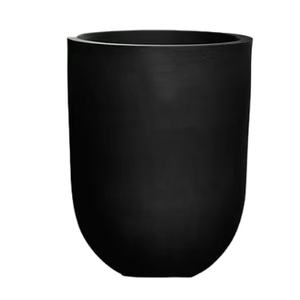
In summary, the oxidation resistant silicon carbide crucible designed for continuous use at 1500°C is a specialized tool for high-temperature industrial processes. Its combination of properties—superior oxidation resistance, high thermal conductivity, and mechanical strength—makes it indispensable where other materials fail. Understanding the conditions for optimal performance and following proper usage and maintenance practices yields long service life and consistent results. This crucible represents a significant advancement in refractory technology, enabling efficient and safe operation in demanding environments.
As industries push the boundaries of high-temperature processing, demand for durable, oxidation-resistant containment solutions will grow. The silicon carbide crucible, with its proven track record, is a cornerstone of modern materials processing. Whether for melting metals, sintering ceramics, or conducting high-temperature reactions, it offers a dependable solution that meets the rigorous requirements of continuous use at 1500°C.

.