Premium Ceramic Crucibles | High-Performance Lab & Industrial Solutions

Key takeaways
- High purity BN crucibles provide exceptionally low contamination for melting highly reactive actinide and rare earth metals.
- Key properties include high thermal stability, chemical inertness, thermal shock resistance, and very high purity levels.
- Compared to alumina, graphite, and zirconia crucibles, BN crucibles offer superior inertness and reduced contamination risks.
- Applications span nuclear fuel fabrication, rare earth magnet production, and laboratory research melting.
- Limitations include oxidation at elevated temperatures and mechanical softness; controlled atmosphere and careful handling are required.
What Is a High Purity BN Crucible for Actinide and Rare Earth Metal Melting?
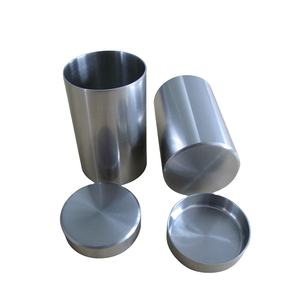
A high purity boron nitride (BN) crucible is a container designed for melting actinide and rare earth metals under extreme conditions. Its defining feature is an exceptionally low impurity level that prevents contamination of the melt. BN crucibles are fabricated from hexagonal boron nitride (h-BN) materials that are sintered or hot-pressed to achieve high density and purity. These crucibles are essential in metallurgical processes where maintaining the chemical composition of reactive metals is critical.
The crucible acts as a containment vessel capable of withstanding very high temperatures while offering excellent thermal shock resistance. Its inert nature minimizes reaction with highly reactive metals such as uranium, plutonium, neodymium, and dysprosium. This makes BN crucibles indispensable in nuclear fuel fabrication, rare earth magnet production, and advanced alloy research, just as a silicon nitride wafer crucible is critical for semiconductor wafer processing.
Key Properties of High Purity BN Crucibles
High purity BN crucibles exhibit several critical properties suitable for melting reactive metals. Their thermal stability allows operation at very high temperatures, often exceeding 2000°C in inert atmospheres or vacuum. They also possess high chemical inertness, meaning they do not readily react with molten metals like uranium, cerium, or lanthanides. This prevents contamination of the metal and extends crucible life.
Another important property is excellent thermal shock resistance, resulting from the low coefficient of thermal expansion of BN. This enables rapid heating and cooling cycles without cracking. Additionally, the material provides good electrical insulation and machinability, allowing custom shapes for different furnace setups. The very high purity is achieved through careful raw material selection and processing, minimizing elements like carbon, oxygen, and metallic impurities that could compromise melt quality.
Table 1 summarizes the key properties and their significance.
| Property | Significance |
|---|---|
| Thermal Stability | Withstands very high temperatures, often exceeding 2000°C, suitable for high-temperature melting processes. |
| Chemical Inertness | Minimizes reaction with molten actinide and rare earth metals, preserving melt purity. |
| Thermal Shock Resistance | Low coefficient of thermal expansion allows rapid heating and cooling without cracking. |
| High Purity | Very high purity reduces contamination from impurities like carbon, oxygen, and metals. |
| Low Wettability | Facilitates complete metal drainage, reducing material loss. |
| Machinability | Can be fabricated into custom shapes for various furnace configurations. |
Advantages Over Other Crucible Materials
When melting actinide and rare earth metals, crucible material must be carefully chosen. Common alternatives include alumina, magnesia, zirconia, and graphite. Alumina crucibles have limited thermal shock resistance and can react with certain rare earth oxides. Graphite crucibles, while thermally stable, introduce carbon contamination, undesirable for high-purity metal processing. Zirconia crucibles are more resistant but can be expensive and prone to thermal shock failure.
High purity BN crucibles combine inertness, thermal shock resistance, and high purity. They do not introduce metallic or carbon contaminants, making them ideal where purity is paramount. BN also exhibits a low wetting angle with many molten metals, facilitating complete drainage of the melt and reducing material loss. These characteristics make BN crucibles a preferred choice in nuclear and rare earth metal processing.
Applications in Actinide and Rare Earth Metal Melting
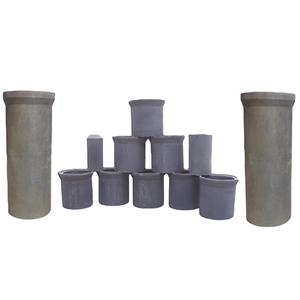
In the nuclear industry, these crucibles are employed for melting uranium and plutonium alloys, while a reactive metal melting crucible might be used for titanium alloys. The crucible's inertness prevents oxidation and maintains the fuel's isotopic composition. In rare earth magnet manufacturing, BN crucibles are used to melt neodymium-iron-boron (NdFeB) alloys, where purity directly affects magnetic performance.
Research laboratories also rely on BN crucibles for melting small batches of actinides and lanthanides for material characterization. The crucibles can be used in vacuum induction melting or arc melting furnaces. Their durability under repeated thermal cycling reduces operational costs and batch-to-batch variability. However, BN crucibles are generally not recommended for use in oxidizing atmospheres due to oxidation of BN at high temperatures.
Fabrication and Quality Assurance of High Purity BN Crucibles
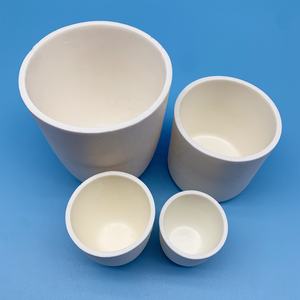
High purity BN crucibles are produced through advanced ceramic processing. The raw material, hexagonal boron nitride powder, is first purified to remove trace contaminants. Common methods include hot pressing or isostatic pressing followed by sintering at high temperatures under controlled atmospheres. The resulting dense BN body exhibits the required mechanical strength and thermal properties.
Quality assurance involves precise measurement of impurity levels using techniques such as inductively coupled plasma mass spectrometry or glow discharge mass spectrometry. The crucible must meet stringent specifications for carbon, oxygen, and metal content. Dimensional tolerances and surface finish are also critical for uniform heating and melt containment. Manufacturers often provide certificates of analysis with each batch.
Limitations and Usage Precautions
Despite their advantages, high purity BN crucibles have limitations. They are not suitable for strong oxidizing atmospheres because BN oxidizes at elevated temperatures, forming boric oxide and nitrogen. This can degrade crucible integrity and contaminate the melt. Additionally, BN crucibles are relatively soft and can be mechanically damaged if handled improperly.
When using BN crucibles, ensure a controlled atmosphere (inert gas like argon or vacuum) during heating. Thermal cycling should be gradual to avoid thermal stress. For applications requiring high mechanical strength, a high fracture toughness crucible may be preferred. Pre-annealing or conditioning of the crucible may be recommended to remove residual moisture and stabilize the material. While BN has good thermal shock resistance, rapid quenching in liquid can cause cracking. Users should follow manufacturer guidelines for safe and effective operation.
Frequently asked questions
What is the typical purity level of a high purity BN crucible?
High purity BN crucibles typically have very high purity levels, with minimal carbon, oxygen, and metallic impurities.
Can high purity BN crucibles be used for melting aluminum or copper?
Yes, but they are most beneficial for reactive metals like actinides and rare earths where purity is critical. For less reactive metals, other materials may be more cost-effective.
What furnace atmosphere is required when using BN crucibles for melting?
An inert atmosphere such as argon or vacuum is recommended to prevent oxidation of BN at high temperatures.
Are BN crucibles reusable?
Yes, with proper handling and controlled thermal cycling, BN crucibles can be reused multiple times for similar melting operations.
What are the alternatives to BN crucibles for actinide metal melting?
Alternatives include yttria-stabilized zirconia, tantalum, and tungsten crucibles, but each has trade-offs in cost, purity, and thermal performance.
.