Premium Ceramic Crucibles | High-Performance Lab & Industrial Solutions

Key takeaways
- BN crucibles combine high thermal conductivity with electrical insulation, making them ideal for induction heating where direct heating of the charge is required.
- Their microwave transparency allows efficient energy transfer in microwave sintering, enabling rapid and uniform heating of the workpiece.
- Excellent thermal shock resistance and chemical inertness provide durability in repeated high‑temperature cycles and non‑contaminating processing.
- BN crucibles are used for melting reactive metals and sintering advanced ceramics, but they have lower mechanical strength and higher cost than some traditional crucible materials.
What Is a BN Crucible for Induction Heating and Microwave Sintering?
A boron nitride (BN) crucible is a ceramic container engineered for high-temperature processes involving induction heating or microwave sintering. Unlike conventional metal or oxide crucibles, BN crucibles combine high thermal conductivity with electrical insulation and microwave transparency, making them suitable for applications requiring uniform heating, chemical inertness, and thermal shock resistance.
In induction heating, the crucible must avoid coupling with the electromagnetic field in a way that causes localized overheating or electrical short circuits. BN’s electrical insulation ensures the induction field passes through the crucible wall and heats the charge material directly, while its high thermal conductivity helps distribute the generated heat evenly. For microwave sintering, the crucible must be transparent to microwave radiation so that energy is absorbed by the workpiece rather than the container, enabling rapid volumetric heating.
The combination of electrical insulation, thermal conductivity, low dielectric loss, and high-temperature stability defines the BN crucible as a specialized tool for advanced sintering and melting processes in research and industrial settings.
| Property | Description |
|---|---|
| Thermal Conductivity | High thermal conductivity enables efficient heat transfer from heating source to charge material, reducing processing time. |
| Electrical Insulation | Excellent electrical insulation prevents eddy currents in induction heating, avoiding power loss and uneven heating. |
| Microwave Transparency | Low dielectric constant and loss tangent allow microwave energy to pass through and heat the workpiece directly. |
| Temperature Stability | Maintains structural integrity up to ~1000°C in air and higher in inert atmospheres. |
| Thermal Shock Resistance | Good resistance to rapid temperature changes reduces risk of cracking during heating/cooling cycles. |
| Chemical Inertness | Non‑reactive with many molten metals and ceramics, preserving purity of the charge. |
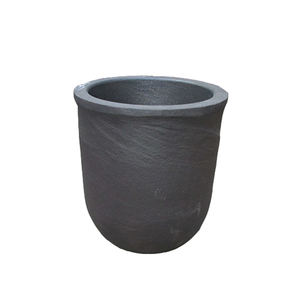
Key Properties Enabling BN Crucibles for High-Temperature Processes
BN ceramics possess a unique set of physical and chemical characteristics suited for induction heating and microwave sintering. First, high thermal conductivity (comparable to some metals) facilitates rapid heat transfer from the heating source to the charge material, reducing processing time. Second, BN is an excellent electrical insulator; its high volume resistivity prevents eddy currents from forming in the crucible wall during induction heating, avoiding parasitic power loss and uneven temperature profiles.
Third, BN exhibits low dielectric constant and low loss tangent at microwave frequencies. This microwave transparency ensures the crucible does not absorb significant microwave energy, preventing self-heating and directing the microwave power into the workpiece for efficient sintering. BN crucibles maintain structural integrity up to around 1000°C in air and up to 2000°C in inert atmospheres or vacuum; in applications requiring even lower thermal expansion, such as precision optics, low thermal expansion Si3N4 crucibles are often used. Their thermal shock resistance reduces the risk of cracking during rapid heating or cooling cycles typical in induction and microwave processes.
Other important properties include chemical inertness against molten metals and non-oxide ceramics, non-wetting behavior with many melts, and easy release of sintered parts. These attributes collectively allow BN crucibles to deliver consistent performance in demanding thermal applications.
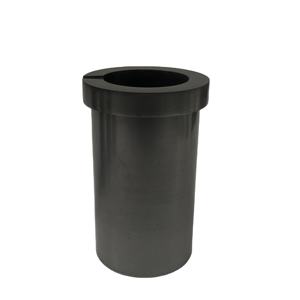
Applications in Induction Heating and Microwave Sintering
BN crucibles are widely used in induction heating for melting and casting reactive metals such as aluminum, magnesium, and their alloys, as well as for sintering advanced ceramics like silicon nitride and silicon carbide. The crucible acts as a container that does not contaminate the melt and allows efficient inductive coupling to the charge. High thermal conductivity helps maintain uniform temperature distribution, essential for producing homogeneous materials.
In microwave sintering, BN crucibles serve as sample holders for both ceramic and metallic powders. Their microwave transparency enables direct heating of the powder compact, often leading to faster densification and finer microstructures compared to conventional sintering. Applications include processing transparent ceramics, electronic substrates, and wear-resistant components. Chemical stability prevents reactions with the workpiece, preserving purity.
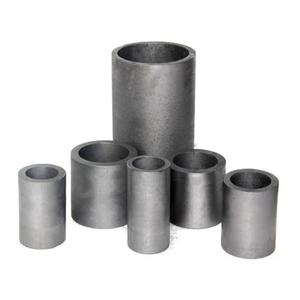
BN crucibles are available in various shapes and sizes, from small laboratory crucibles to larger industrial vessels. They can be machined to accommodate specific geometries required for different heating configurations, such as cylindrical, conical, or plate-like forms. This versatility makes BN crucibles a standard choice for researchers and engineers working on induction heating and microwave sintering processes.
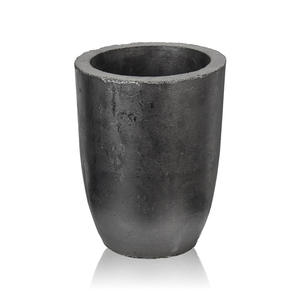
Advantages and Limitations of BN Crucibles
The primary advantages of BN crucibles for induction heating and microwave sintering include high thermal conductivity for fast and even heating, excellent electrical insulation to prevent coupling losses, microwave transparency for efficient energy transfer, thermal shock resistance for rapid cycling, and chemical inertness for contamination-free processing. These benefits often translate into shorter cycle times, improved product quality, and extended crucible lifetime relative to alumina, graphite, or high fracture toughness Si3N4 crucible alternatives.
BN crucibles also have limitations. They are relatively expensive compared to common oxide crucibles. Mechanical strength is lower than that of silicon carbide, alumina, or hot pressed Si3N4 crucibles, making them more prone to damage under mechanical stress. In oxidizing atmospheres above 1000°C, BN can oxidize, restricting use in air. The brittleness of ceramic BN requires careful handling to avoid chipping or cracking. Despite these drawbacks, for applications where thermal and electrical performance outweigh cost and mechanical considerations, BN crucibles remain a preferred solution.
When selecting a BN crucible, factors such as operating atmosphere, temperature range, thermal cycling requirements, and compatibility with the charge material should be evaluated. Proper selection ensures optimal performance and longevity in the intended induction heating or microwave sintering process.
Frequently asked questions
Can BN crucibles be used in induction heating?
Yes, BN crucibles are particularly suitable for induction heating because they are electrically insulating, preventing eddy currents in the crucible wall, while their high thermal conductivity efficiently transfers heat to the charge material.
Why is microwave transparency important for a sintering crucible?
Microwave transparency ensures that the crucible does not absorb the microwave energy intended for the workpiece. This allows direct, volumetric heating of the workpiece, leading to faster and more uniform sintering without overheating the container.
What are the temperature limits of BN crucibles?
In oxidizing atmospheres, BN crucibles can be used up to approximately 1000°C. In inert atmospheres or vacuum, they can withstand temperatures up to 2000°C. The exact limit depends on the specific grade of BN and the heating profile.
How do BN crucibles compare to graphite crucibles for induction heating?
Graphite crucibles are electrically conductive and can couple with the induction field, leading to self‑heating and potential temperature gradients. BN crucibles, being insulating, allow the field to penetrate directly to the charge, offering more uniform heating and better control. Graphite is generally lower cost but may introduce carbon contamination.
.
