Premium Ceramic Crucibles | High-Performance Lab & Industrial Solutions

Key takeaways
- A boron carbide crucible is a refractory vessel made mainly of B4C for containing or contacting hard abrasive powders.
- Boron carbide is considered for its high hardness and thermal stability, which can reduce wear and contamination.
- Brittleness and thermal shock sensitivity are key limitations that affect handling and process design.
- Suitability depends on temperature, atmosphere, powder chemistry, and mechanical loading.
- Boron carbide crucibles are often used in specialty or small-batch processes rather than all abrasive powder operations.
What Is a Boron Carbide Crucible for High Hardness Abrasive Powder Processing?
A boron carbide crucible for high hardness abrasive powder processing is a refractory vessel made primarily of boron carbide (B4C) that holds, contains, or supports hard abrasive powders during high-temperature or high-wear processing steps. In this context, the crucible is not simply a container; it is a wear-resistant and heat-resistant component whose role is to limit contamination, reduce vessel erosion, and maintain dimensional stability while abrasive media are handled.
The term combines three elements: the material (boron carbide), the form (crucible), and the application (processing of high hardness abrasive powders). Boron carbide is a covalent ceramic known for high hardness and good thermal stability, which makes it relevant where abrasive powders can mechanically attack ordinary crucible materials. The crucible form allows the material to be used as a liner, a small batch vessel, or a specialty component in processes such as heating, calcination, or powder handling.
Whether a boron carbide crucible is the right choice depends on the actual process conditions. Temperature, atmosphere, powder chemistry, thermal cycling, and mechanical loading all affect performance. A boron carbide crucible is generally considered when abrasion resistance and high-temperature capability are priorities, but it is not automatically suitable for every abrasive powder or every furnace environment.
| Key Point | Explanation |
|---|---|
| Material | Boron carbide (B4C), a hard covalent ceramic used for wear and heat resistance. |
| Form | Crucible, liner, or specialty vessel that contains or contacts abrasive powder. |
| Primary function | Hold or support high hardness abrasive powders during processing. |
| Main advantage | High hardness and thermal stability can reduce wear and contamination. |
| Main limitation | Brittleness and sensitivity to thermal shock and mechanical impact. |
| Typical use | Small-batch or specialty high-temperature abrasive powder processing. |
| Selection basis | Process temperature, atmosphere, powder chemistry, and handling conditions. |
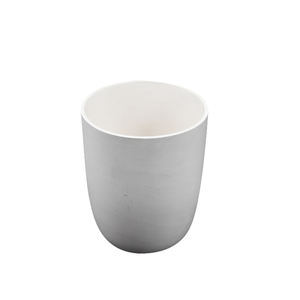
Why Boron Carbide Is Considered for Abrasive Powder Contact
Boron carbide is often considered for abrasive powder contact because its hardness is high relative to many common ceramic and metal materials. When a crucible surface is exposed to hard particles, the main degradation modes are scratching, gouging, and gradual material loss. A harder crucible surface can reduce the depth and rate of such damage, which helps preserve the vessel shape and limits the amount of crucible material that may enter the powder batch.
The material also offers useful thermal properties. Boron carbide has a high melting point and retains structure at elevated temperatures, so it can be used in processes where the crucible must withstand heat while still resisting abrasion. For abrasive powders that are processed at high temperature, this combination is the main reason boron carbide appears in crucible and liner discussions.
However, hardness alone does not define performance. Boron carbide is a brittle ceramic, so it is sensitive to thermal shock and mechanical impact. A crucible made from it may perform well under controlled heating and steady loading, but it can be vulnerable to rapid temperature changes or dropping. The practical conclusion is that boron carbide is a candidate material when abrasion and heat are both present, provided the process is designed to manage brittleness and thermal stress.
Key Properties That Affect Crucible Performance
The performance of a boron carbide crucible in abrasive powder processing depends on several material and design properties. Hardness influences wear resistance. Thermal conductivity and thermal expansion influence how the crucible responds to heating and cooling. Density and porosity influence mechanical strength and the risk of powder infiltration. Oxidation resistance influences whether the surface remains stable in air or other oxygen-containing atmospheres.
For abrasive powder processing, surface condition is also important. A dense, well-finished crucible surface is generally less likely to trap particles or shed material than a rough or porous surface. Grain structure and any secondary phases can affect local wear behavior. If the crucible is used as a liner inside a larger vessel, the fit and support behind the liner can influence whether the brittle ceramic experiences point loads.
These properties should be evaluated together rather than in isolation. A crucible with high hardness but poor thermal shock resistance may fail in a process with rapid cycling. A crucible with good thermal stability but high porosity may contaminate the powder or wear unevenly. The appropriate specification depends on the dominant degradation mode in the actual process.
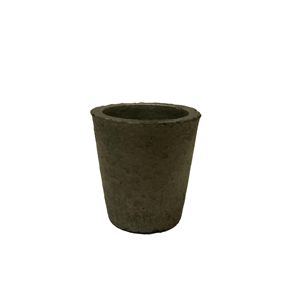
How a Boron Carbide Crucible Is Used in Abrasive Powder Processing
In abrasive powder processing, a boron carbide crucible may be used as a batch vessel for heating, drying, calcination, or reaction steps. It may also be used as a wear liner in equipment where abrasive powder flows or is agitated. In either role, the crucible separates the abrasive material from the surrounding structure and provides a contact surface that is intended to resist wear.
The processing sequence usually involves loading the abrasive powder into or onto the crucible, applying heat or mechanical action, and then unloading the powder. Each step creates different stresses. Loading can cause impact or abrasion. Heating creates thermal expansion and possible chemical interaction. Unloading can cause scraping or thermal shock if the crucible is cooled quickly. A successful application considers all of these steps, not only the peak temperature.
Boron carbide crucibles are often used in smaller or specialty setups rather than large continuous processes, because the material is costly and brittle. They are more likely to be found where contamination control, wear resistance, or high-temperature stability justifies the material cost. The exact size, wall thickness, and support design should be matched to the mechanical and thermal loads of the process.
Conditions Where Boron Carbide Crucibles Are a Good Fit
A boron carbide crucible is a reasonable fit when the abrasive powder is hard enough to cause rapid wear in conventional crucibles, when the process temperature is high, and when contamination from the crucible material must be limited. It is also a reasonable fit when the crucible can be supported and heated in a way that avoids sudden thermal gradients and mechanical impact.
The crucible is less likely to be a good fit when the process involves frequent rapid thermal cycling, strong mechanical shock, or a furnace atmosphere that reacts with boron carbide. In those cases, a different crucible material or a composite design may be more appropriate. The decision should be based on the specific powder, temperature profile, atmosphere, and handling method.
In practice, a boron carbide crucible is often selected as part of a system rather than as a standalone solution. The support structure, heating method, loading technique, and cooling schedule all influence whether the crucible survives long enough to provide value. A controlled process with gradual heating and cooling is generally more compatible with boron carbide than an aggressive, high-shock process.

Limitations and Practical Trade-Offs
The main limitations of boron carbide crucibles are brittleness, cost, and sensitivity to thermal shock. Boron carbide is hard but not tough; it can crack under impact or uneven loading. This means handling procedures and support design matter as much as the material specification. A crucible that is dropped or forced into a cold furnace can fail even if the material itself is appropriate.
Cost is another trade-off. Boron carbide is more expensive than many common refractory materials, and fabrication of large or complex shapes can be difficult. For some abrasive powder processes, a less expensive material with a shorter service life may be more economical. The choice depends on how much wear resistance and contamination control are worth in the specific operation.
There are also chemical compatibility considerations. Boron carbide can react with certain metals, oxides, or atmospheres at high temperature. The user should confirm compatibility with the actual powder and furnace environment. If the powder or atmosphere attacks the crucible, the wear resistance advantage may be lost. In such cases, a protective coating, a different crucible material, or a modified process may be needed.
How to Evaluate Whether Boron Carbide Is the Right Crucible Material
Evaluating boron carbide for a specific abrasive powder process starts with identifying the dominant failure mode. If the current crucible fails mainly by abrasion, boron carbide may help. If it fails by thermal shock, mechanical impact, or chemical attack, boron carbide may not solve the problem and could even perform worse than a tougher or more chemically stable material.
The next step is to review the process conditions: maximum temperature, heating and cooling rates, atmosphere, powder chemistry, particle size and hardness, and the way the powder is loaded and unloaded. These factors determine whether the crucible will experience uniform or localized stress. A trial or small-scale test can provide useful information, but it should be designed to represent the actual process as closely as possible.
Finally, consider the total cost of ownership. A boron carbide crucible may last longer but cost more upfront. It may also require more careful handling and support. If the process can be adjusted to reduce thermal shock and impact, boron carbide can be a durable option. If not, a different material or design may be more practical.
Frequently asked questions
What is a boron carbide crucible used for in abrasive powder processing?
It is used to contain, support, or line equipment that handles high hardness abrasive powders, especially where wear resistance and high-temperature stability are needed.
Is boron carbide always the best choice for abrasive powders?
No. Boron carbide is hard and thermally stable, but it is brittle and can be sensitive to thermal shock. It is suitable only when the process conditions and handling method are compatible with those limitations.
What conditions can damage a boron carbide crucible?
Rapid heating or cooling, mechanical impact, uneven loading, and chemically reactive atmospheres or powders can damage a boron carbide crucible.
How should a boron carbide crucible be selected?
Selection should consider the dominant wear mode, maximum temperature, heating and cooling rates, atmosphere, powder chemistry, and the way the powder is loaded and unloaded.
.