Premium Ceramic Crucibles | High-Performance Lab & Industrial Solutions

Key takeaways
- PBN crucibles are manufactured via chemical vapor deposition and offer high purity and thermal stability for MBE applications.
- Key properties include anisotropic thermal conductivity, chemical inertness, and electrical insulation.
- They are used to hold source materials like Ga, In, and Al in MBE effusion cells.
- PBN crucibles withstand temperatures over 1800°C in inert atmospheres.
Introduction to Pyrolytic Boron Nitride Crucibles for MBE
A pyrolytic boron nitride (PBN) crucible is a high-purity, high-temperature-resistant container produced via chemical vapor deposition (CVD). In molecular beam epitaxy (MBE) systems, these crucibles hold source materials such as aluminum, gallium, or indium that are thermally evaporated to form thin films. The material's anisotropic thermal conductivity and low outgassing make it a standard choice for ultra-high-vacuum environments.
The production deposits boron nitride layers under controlled conditions, creating a dense, inert structure with minimal impurities. PBN crucibles offer good thermal shock resistance and can operate above 1800°C in inert atmospheres. Their chemical inertness and thermal stability support consistent evaporation rates during MBE growth.
This article covers the definition, key properties, typical applications, and common questions about PBN crucibles for MBE sources. The information is based on general industry knowledge and does not include proprietary or verified performance data from specific manufacturers.
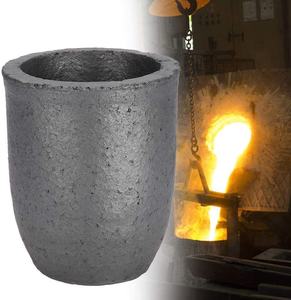
Key Properties of Pyrolytic Boron Nitride Crucibles
PBN crucibles have several properties that suit MBE requirements. They offer high purity, typically above 99.9%, which minimizes film contamination. The material is electrically insulating with a low dielectric constant, making it compatible with electron beam evaporation sources.
Thermally, PBN is strongly anisotropic: thermal conductivity is much higher in the plane of deposition than through the thickness. This helps maintain uniform temperature across the crucible body and reduces thermal gradients. The low coefficient of thermal expansion reduces stress during heating and cooling cycles.
Mechanically, the crucible is relatively brittle at room temperature but retains strength at high temperatures. It does not react with most molten metals or semiconductors, preventing unwanted chemical interactions. The naturally smooth and non-wetting surface aids clean release of condensed material.
| Property | Description |
|---|---|
| Purity | Typically above 99.9%, minimizing film contamination. |
| Thermal Conductivity | Anisotropic: high in-plane, low through-thickness for uniform heating. |
| Thermal Shock Resistance | Good, due to low coefficient of thermal expansion. |
| Chemical Inertness | Non-reactive with most molten metals and semiconductors. |
| Electrical Insulation | Excellent, compatible with electron beam sources. |
| Maximum Operating Temperature | Exceeds 1800°C in inert atmosphere. |
| Surface Wetting | Non-wetting, promotes clean evaporation. |
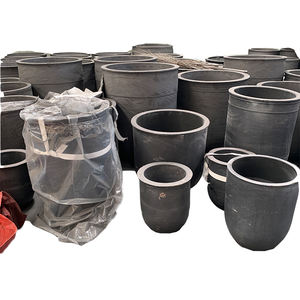
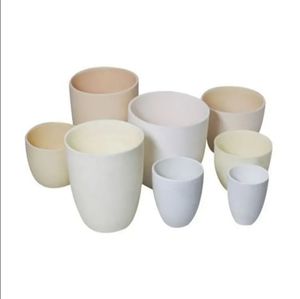
Applications in Molecular Beam Epitaxy Sources
In MBE systems, PBN crucibles contain solid or liquid source materials that are heated to produce a molecular beam. Common source materials include group III elements (e.g., Ga, In, Al) and dopants (e.g., Si, Be). The crucible is typically placed inside a heated effusion cell, where temperature control is critical for accurate deposition rate.
Crucible geometry can vary: standard shapes include cylindrical, conical, or multistage designs. Some crucibles have a lip or baffle to minimize spitting or direct the beam. The choice of size and shape depends on source material volume and the desired beam flux distribution.
PBN crucibles are often preferred over other high-temperature ceramics such as alumina or quartz because they offer better thermal shock resistance and lower reactivity with many metals. However, they are not recommended for fluorine-containing compounds or strong oxidizing environments at high temperatures.
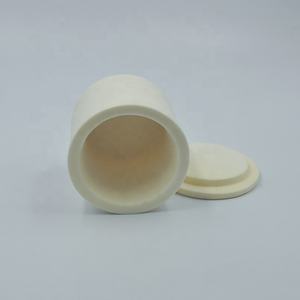
Frequently asked questions
Can a PBN crucible be used for all MBE source materials?
PBN crucibles are compatible with many metals, semiconductors, and dopants. However, they are not recommended for fluorine-containing materials or strong oxidizing agents at high temperatures, as these can react with the boron nitride.
How does the anisotropic thermal conductivity of PBN affect MBE deposition?
The high in-plane thermal conductivity helps maintain uniform temperature across the crucible body, reducing thermal gradients. This uniformity contributes to stable evaporation rates and consistent film growth.
Are PBN crucibles reusable?
PBN crucibles can be reused if they are not chemically attacked or mechanically damaged. After use, they are typically cleaned by heating in vacuum or using appropriate solvents. Their brittleness requires careful handling to avoid cracks.
.