Premium Ceramic Crucibles | High-Performance Lab & Industrial Solutions

Key takeaways
- A B4C crucible is a boron carbide container used in high-temperature thermoelectric synthesis and hot pressing.
- Boron carbide is selected for hardness, thermal stability, and chemical character, but suitability depends on the specific process.
- Hot pressing places additional demands on the crucible, including pressure transfer and part release.
- B4C is one option among graphite, alumina, zirconia, and boron nitride crucibles.
- Selection should be based on temperature, atmosphere, charge chemistry, and equipment compatibility.
- Inspection and documentation help determine whether a B4C crucible performs as intended.
What Is a B4C Crucible for Thermoelectric Material Synthesis and Hot Pressing?
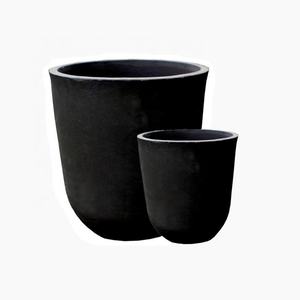
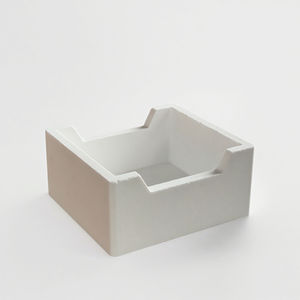
A B4C crucible for thermoelectric material synthesis and hot pressing is a boron carbide (B4C) container used to hold, contain, or support thermoelectric material during high-temperature synthesis and densification steps such as hot pressing. In this role, the crucible is a high-temperature contact material, not just a vessel: it must tolerate thermal load, resist chemical interaction with the charge, and avoid introducing unwanted contamination into the final thermoelectric material.
The term combines three elements: the material (boron carbide, B4C), the hardware form (crucible), and the process context (thermoelectric material synthesis and hot pressing). A B4C crucible is therefore best understood as a process component selected for a specific combination of temperature, atmosphere, contact chemistry, and mechanical handling conditions, rather than as a universal replacement for every crucible type.
Because thermoelectric materials are sensitive to composition and microstructure, the crucible's behavior during synthesis and pressing matters. A crucible that reacts with the melt or powder, sheds particles, or deforms under load can change the chemistry or geometry of the workpiece. B4C is considered when its combination of hardness, thermal stability, and chemical character fits the process window, but the final choice depends on the actual material system, temperature profile, and equipment setup.
| Aspect | Explanation |
|---|---|
| Material | Boron carbide (B4C), a hard ceramic with high thermal stability |
| Form | Crucible, die, or container used to hold or shape the charge |
| Process context | Thermoelectric material synthesis and hot pressing |
| Primary role | Containment, thermal contact, and dimensional support at high temperature |
| Key selection factors | Temperature, atmosphere, chemical compatibility, pressure, and thermal expansion |
| Not a universal solution | Suitability depends on the specific thermoelectric material and process conditions |
Why Boron Carbide Is Considered for Thermoelectric Synthesis and Hot Pressing
Boron carbide is a ceramic material known for high hardness and good thermal stability, which makes it relevant where a crucible must survive elevated temperatures and repeated thermal cycling. In thermoelectric synthesis, the charge may be heated to form or melt a compound, and in hot pressing the same or a related material is consolidated under pressure. Both steps place demands on the container or die assembly.
For hot pressing specifically, the tooling must transfer pressure while maintaining shape. B4C's hardness and stiffness are relevant when the process requires a dimensionally stable contact surface. Hardness alone does not guarantee success, however: thermal expansion matching, reaction chemistry, and the ability to release the pressed part without damage are equally important.
Boron carbide is also used in other high-temperature containment and contact applications, including boron nitride crucible formats for processes such as induction heating, microwave sintering, and molecular beam epitaxy sources. Those applications differ from thermoelectric hot pressing, but they illustrate the broader family of boron-based ceramic crucibles selected for thermal and chemical stability. A B4C crucible should be evaluated on the same principle: match the material to the process, not to a generic label.
Key Properties That Matter in a B4C Crucible
When evaluating a B4C crucible for thermoelectric work, several properties should be considered together. Thermal stability determines the upper temperature range in which the crucible can be used without unacceptable degradation. Chemical compatibility determines whether the crucible will react with the thermoelectric charge, its precursors, or any flux or dopant present. Mechanical strength and hardness affect how the crucible behaves under hot-pressing pressure and during handling.
Thermal expansion behavior is another factor. If the crucible and the material inside expand at very different rates, the charge may crack, the crucible may be stressed, or the pressed part may be difficult to remove. In hot pressing, the die or crucible also interacts with punches and spacers, so the whole tooling stack must be considered rather than the crucible in isolation.
Porosity and surface condition can influence contamination and release. A dense, well-finished B4C surface may reduce particle shedding and sticking, while a rough or porous surface may increase mechanical interlocking with the charge. Because these effects depend on the specific grade and finish, the appropriate specification should be confirmed with the supplier for the intended thermoelectric material and process cycle.
How a B4C Crucible Is Used in Thermoelectric Material Synthesis
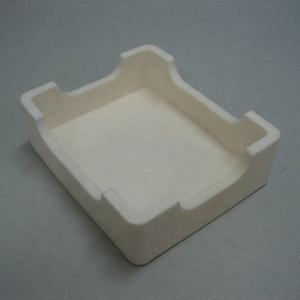
In synthesis, a B4C crucible may be used to contain a charge during heating, melting, or reaction. The crucible's role is to hold the material in place, limit contact with the surrounding environment, and provide a stable interface at temperature. The exact procedure depends on whether the thermoelectric material is prepared by melting, solid-state reaction, or another route.
If the process involves a melt, the crucible must resist wetting and chemical attack by the liquid. If the process is solid-state, the crucible mainly provides containment and thermal contact. In both cases, the crucible should be compatible with the furnace atmosphere, whether that is inert gas, vacuum, or another controlled environment.
After synthesis, the material may be removed, crushed, or transferred to a hot-pressing step. The condition of the crucible after use, including any discoloration, cracking, or reaction layer, can indicate whether the material is suitable for repeated runs. These observations should be recorded as part of process development rather than assumed from a general material description.
How a B4C Crucible Functions in Hot Pressing
In hot pressing, a B4C crucible or die may serve as the container that holds powder or preform while heat and pressure are applied. The tooling must transmit load to the material, maintain alignment, and allow the densified part to be removed. The crucible's mechanical behavior under load is therefore central to the process.
Hot pressing often uses graphite tooling because it is widely available and easy to machine, but graphite can react with some materials or contribute carbon contamination. A B4C crucible may be considered when the process requires a harder, more wear-resistant contact surface or when carbon interaction is a concern. The trade-off is that B4C is more difficult to machine and may be more costly, so it is typically selected for specific process needs rather than as a default.
The interaction between the crucible, punches, and release media should be planned. If the pressed part sticks, the removal step can damage the part or the crucible. If the crucible deforms, the part geometry may be lost. These are process-design issues that depend on temperature, pressure, dwell time, and the specific thermoelectric material.
B4C Crucible Compared with Other Crucible Materials
B4C is one option among several high-temperature crucible materials. Graphite is common in hot pressing because it is machinable and readily available, but it can react with certain charges and may introduce carbon. Alumina and zirconia are used in some high-temperature applications, but their chemical compatibility and thermal expansion behavior differ from boron carbide. Boron nitride crucibles are chosen in some processes for their non-wetting character and machinability.
The right comparison is not which material is universally better, but which material fits the thermoelectric system, the furnace atmosphere, and the hot-pressing tooling. A material that is inert to one charge may react with another. A material that releases easily in one setup may stick in another. Selection should be based on the actual process conditions and on supplier guidance for the specific grade.
Because thermoelectric materials vary widely, from bismuth telluride-based systems to silicides and other compounds, no single crucible material is appropriate for all of them. B4C should be evaluated as a candidate where its hardness, thermal stability, and chemical character offer an advantage over the alternatives being considered.
Selection and Handling Considerations for B4C Crucibles
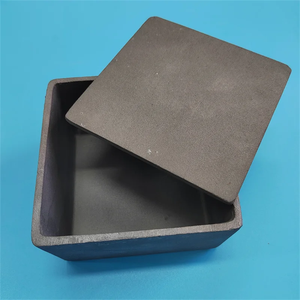
Selecting a B4C crucible begins with defining the process window: maximum temperature, heating and cooling rates, atmosphere, pressure, and the chemistry of the charge. These parameters determine whether B4C is compatible and what grade, density, and dimensions are appropriate. The crucible should also fit the existing furnace and pressing equipment without requiring unsafe modifications.
Handling is important because boron carbide is hard and brittle. Thermal shock, mechanical impact, and uneven heating can cause cracking. Preheating schedules, support fixtures, and careful loading can reduce risk. The crucible should be inspected before and after use for cracks, chips, or reaction layers.
Documentation of each run helps build a reliable process. Recording temperature, pressure, atmosphere, and observed crucible condition allows the team to identify whether B4C is performing as intended or whether an alternative should be tested. This is a practical approach that does not rely on assumptions about performance.
Frequently Asked Questions
Common questions about B4C crucibles for thermoelectric synthesis and hot pressing tend to focus on suitability, comparison with graphite, and reuse. The answers depend on the specific material system and process conditions, so the guidance below is general rather than a substitute for testing.
Is B4C always better than graphite for hot pressing? No. Graphite is widely used and may be entirely suitable for many thermoelectric processes. B4C is considered when its hardness, wear resistance, or chemical character offers a specific advantage, but it is not a universal upgrade.
Can a B4C crucible be reused? Reuse depends on the grade, the process, and the condition after each run. Inspection for cracks, reaction layers, and dimensional change is necessary before reuse. There is no general rule that applies to all B4C crucibles.
Does B4C react with thermoelectric materials? Reactivity depends on the specific charge, temperature, and atmosphere. Some combinations may be compatible while others are not. Compatibility should be confirmed for the intended material system rather than assumed.
Frequently asked questions
What is a B4C crucible used for in thermoelectric material synthesis?
It is used to contain a thermoelectric charge during high-temperature synthesis, providing a stable interface and limiting contact with the surrounding environment. The exact role depends on whether the process involves melting, solid-state reaction, or another route.
Is a B4C crucible suitable for hot pressing?
It can be considered for hot pressing where its hardness, wear resistance, or chemical character offers an advantage. Suitability depends on temperature, pressure, atmosphere, and the specific thermoelectric material, so it should be evaluated for the intended process.
How does B4C compare with graphite for hot pressing tooling?
Graphite is widely used and machinable, but it can react with some charges or contribute carbon. B4C may be chosen when a harder or more wear-resistant contact surface is needed, though it is more difficult to machine and may be more costly.
Can a B4C crucible be reused?
Reuse depends on the grade, process conditions, and the crucible's condition after each run. Inspection for cracks, reaction layers, and dimensional change is necessary before reuse.
.
RELATED POSTS