Premium Ceramic Crucibles | High-Performance Lab & Industrial Solutions

Key takeaways
- A high density B4C crucible is a boron carbide vessel or contact part used where abrasive slurry meets a surface.
- Boron carbide is chosen for hardness and low density, but it is a brittle ceramic with impact and thermal shock limits.
- High density refers to a denser body with less open porosity, not a guarantee of performance on its own.
- Selection depends on slurry characteristics, temperature, geometry, mounting, and handling.
- Specific density values, certifications, and service-life claims require supplier documentation.
What Is a High Density B4C Crucible for Wear Resistant Components in Slurry Mixing?
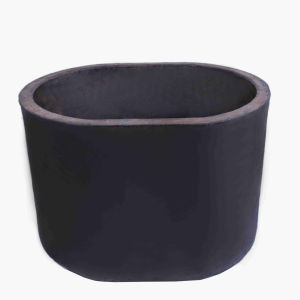
A high density B4C crucible for wear resistant components in slurry mixing is a boron carbide (B4C) vessel with a dense ceramic body, used as a container or contact part where abrasive slurry is handled or where wear resistant components are processed. Here, "high density" means the B4C body is produced with low porosity, and "crucible" refers to the shaped vessel form rather than a general-purpose mixing tank.
The term combines three elements: the material (boron carbide), the physical form (a crucible), and the application setting (slurry mixing involving wear resistant components). Each element narrows what the product is and what it is not. A B4C crucible is not a steel or polymer mixing vessel, and a high density grade is not the same as a porous or binder-rich grade.
This definition matters because slurry mixing exposes contact parts to abrasion, and the contact material affects how long a component lasts and whether contamination is acceptable. A high density B4C crucible is therefore best understood as a wear-oriented ceramic component option, not as a universal replacement for all slurry mixing equipment.
| Element | Description |
|---|---|
| Material | Boron carbide (B4C), a hard ceramic used in wear-oriented applications |
| Form | Crucible-shaped vessel or contact part, not a general mixing tank |
| Density | Dense body intended to reduce open porosity compared with lower density grades |
| Application | Slurry mixing where abrasive wear of contact surfaces is a concern |
| Key limitation | Brittle ceramic; sensitive to impact and thermal shock depending on grade and design |
| Selection basis | Slurry characteristics, temperature, geometry, mounting, and handling conditions |
Why Boron Carbide Is Considered for Wear Resistant Components
Boron carbide is a ceramic material known for high hardness and low density relative to many metals. These two properties explain why it appears in wear resistant component discussions: hardness relates to resistance to abrasive action, and low density relates to weight-sensitive designs. In slurry mixing, where particles move against surfaces, hardness is the property most often cited when B4C is proposed.
The material also has limits. Boron carbide is a brittle ceramic, so it is sensitive to mechanical impact and thermal shock depending on grade and design. A high density B4C crucible should therefore be evaluated for the specific slurry, particle size, operating temperature, and handling conditions rather than assumed to suit every mixing duty.
In practice, boron carbide is often considered where abrasive wear is a dominant concern and where the brittleness and cost of a ceramic can be managed through design, support structures, and careful handling.
What High Density Means for a B4C Crucible
Density in a ceramic body is usually discussed in relation to porosity. A high density B4C crucible is intended to have a denser body with less open porosity than a lower density alternative. Lower porosity can matter in slurry service because open pores may provide paths for abrasive particles and liquids to enter the surface region.
Density is not a standalone guarantee of performance. A dense body can still fail if it is poorly supported, subjected to sharp impact, or exposed to conditions outside its design range. Density should be treated as one specification among several, alongside dimensions, surface condition, and the grade's intended use.
Because no source materials were provided for this draft, specific density values, porosity percentages, and test results are not stated here. Buyers should request the manufacturer's declared specifications and verify them against the intended slurry mixing duty.
How a B4C Crucible Fits into Slurry Mixing Setups
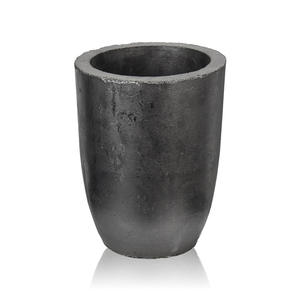
In slurry mixing, a crucible-shaped B4C part may serve as a container, liner, or localized wear component depending on the equipment design. The crucible form is most relevant when the process needs a shaped vessel rather than a flat tile or a simple pipe section. Its role is to present a hard, wear-oriented surface to the moving slurry.
Fit is a practical question. The part must match the equipment's dimensions, mounting method, and thermal environment. A crucible that is mechanically constrained in the wrong way may experience stress concentrations, and a part that is not properly supported may be more vulnerable to impact damage.
Slurry mixing systems vary widely, so the same crucible type may be suitable in one setup and unsuitable in another. The decision should be based on the actual contact geometry, particle characteristics, and maintenance approach rather than on the material name alone.
Selection Conditions and Practical Limits
Selecting a high density B4C crucible for slurry mixing should begin with the operating conditions: what is being mixed, how abrasive the particles are, the temperature, and whether thermal cycling occurs. These conditions determine whether a ceramic wear part is appropriate at all and which grade and geometry should be considered.
Handling and installation are equally important. Boron carbide ceramics require care during assembly and maintenance to avoid chipping and cracking. Designs that distribute loads and avoid point contact tend to be more robust than designs that clamp a brittle part rigidly.
Cost and availability are also part of the selection picture. Boron carbide is a specialized ceramic, and a high density crucible is typically an engineered component rather than a commodity item. Buyers should weigh the expected service life against the cost and lead time, using supplier data rather than assumptions.
Key Points to Confirm Before Ordering
Before ordering, confirm the material grade, the density or porosity specification the supplier declares, the dimensions and tolerances, and the intended contact conditions. Ask how the part should be mounted and what handling precautions apply. These details turn a general material choice into a workable component.
It is also useful to clarify what the supplier can and cannot guarantee. Statements about wear life depend on the application, and no supplier can promise a specific service life without knowing the slurry and operating conditions. A clear specification and a realistic expectation of performance are more useful than broad claims.
Where documentation is needed, request the relevant material data and inspection records. This draft does not include certifications, test results, or customer cases because no source materials were supplied; those items should be verified directly with the manufacturer.
Frequently asked questions
What is a high density B4C crucible used for in slurry mixing?
It is used as a crucible-shaped boron carbide vessel or contact part where abrasive slurry is handled. Its role is to present a hard, wear-oriented surface, but suitability depends on the specific slurry, temperature, geometry, and mounting conditions.
Does high density mean the crucible will not wear out?
No. High density indicates a denser body with less open porosity, which can be relevant to abrasive service, but it does not guarantee a specific service life. Wear depends on the slurry, operating conditions, and how the part is installed and handled.
What should buyers confirm before ordering?
Buyers should confirm the material grade, declared density or porosity, dimensions and tolerances, mounting method, and handling precautions. Certifications and test data should be requested directly from the supplier.
.