Premium Ceramic Crucibles | High-Performance Lab & Industrial Solutions

Key takeaways
- A boron carbide crucible is a high-temperature vessel made mainly from boron carbide (B4C).
- Boron-10 in boron carbide captures thermal neutrons, which supports neutron absorption and shielding.
- The crucible can act as both a container and a neutron-absorbing component in nuclear settings.
- Performance depends on boron-10 content, density, wall thickness, purity, and geometry.
- Boron carbide crucibles have limitations, including brittleness and chemical compatibility considerations.
What Is a Boron Carbide Crucible for Neutron Absorption and Nuclear Applications?
A boron carbide crucible for neutron absorption and nuclear applications is a high-temperature vessel made primarily from boron carbide (B4C), a ceramic material that combines very high hardness with a strong ability to absorb neutrons. In nuclear settings, the same material that gives the crucible its wear resistance and thermal stability also makes it useful for shielding, control, and containment tasks where neutron flux must be managed.
The term covers two related ideas. First, it describes a physical crucible: a container used to hold, melt, or process materials at elevated temperatures. Second, it describes a functional role: because boron carbide interacts strongly with neutrons, the crucible can serve as part of a neutron-absorbing or shielding system rather than as a simple inert container.
This definition matters because boron carbide is not chosen for nuclear work only for its mechanical strength. Its neutron absorption behavior is a material property that depends on composition, density, and the specific isotope boron-10, which is the isotope most responsible for neutron capture. A crucible described this way is therefore both a processing tool and a functional nuclear material component.
| Aspect | Explanation |
|---|---|
| Material | Boron carbide (B4C), a hard ceramic with high-temperature stability |
| Neutron absorption | Boron-10 captures thermal neutrons, removing them from the environment |
| Crucible role | Container for high-temperature processing and part of neutron management |
| Key factors | Boron-10 content, density, wall thickness, purity, and geometry |
| Typical uses | Shielding, control components, research, and high-temperature processing |
| Limitations | Brittleness, thermal shock sensitivity, and chemical compatibility limits |
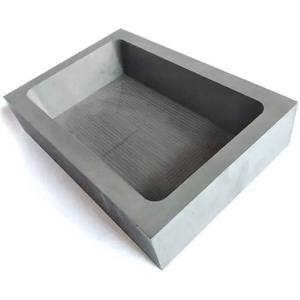
Why Boron Carbide Is Used for Neutron Absorption
Boron carbide is used for neutron absorption because boron, and especially the boron-10 isotope, has a high probability of capturing thermal neutrons. When a neutron is absorbed by boron-10, the nucleus undergoes a reaction that produces helium and lithium. This reaction removes the neutron from the surrounding environment, which is the basic mechanism behind boron-based shielding and control materials.
In a crucible context, this means the vessel is not merely a passive container. If the crucible is made from boron carbide with a suitable boron-10 content, its walls can absorb a portion of the neutrons that reach them. That property is relevant in nuclear applications where reducing neutron leakage, limiting activation of nearby materials, or shaping neutron flux is part of the design goal.
The absorption behavior is influenced by how much boron-10 is present, how dense the ceramic is, and how thick the crucible wall is. A porous or low-density body offers less material along the neutron path, while a dense, uniform body presents more boron atoms per unit volume. These are general material relationships rather than guaranteed performance figures, and actual behavior depends on the specific product and application.
Key Properties of Boron Carbide Relevant to Nuclear Crucibles
Boron carbide is a covalent ceramic with a combination of properties that suit demanding nuclear and high-temperature environments. It is extremely hard, has a high melting point, and retains strength at temperatures where many metals would soften or fail. These traits support its use as a crucible material for melting and handling certain metals and alloys.
For nuclear applications, the most relevant property is neutron absorption. Boron carbide is often described as a neutron absorber because of the boron-10 capture reaction. This makes it useful in control rods, shielding, and other neutron-absorbing components. A crucible made from the same material can therefore contribute to neutron management while also serving as a container.
Other properties matter as well. Boron carbide has relatively low density compared with some refractory metals, which can be an advantage where weight is a consideration. It also has good thermal stability, meaning it can withstand high temperatures without rapid degradation. However, like many ceramics, it can be brittle, so mechanical design and handling conditions affect service life.
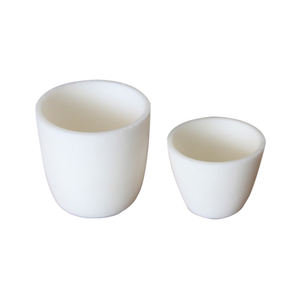
How a Boron Carbide Crucible Functions in Nuclear Applications
In nuclear applications, a boron carbide crucible can function in more than one way. As a container, it can hold materials during melting, sintering, or other high-temperature processing steps. As a neutron absorber, its walls can capture neutrons that pass through them, which may help reduce neutron escape or modify the local neutron environment.
The dual role is useful when a process involves both thermal treatment and neutron exposure. For example, a crucible might be used to contain a material while it is heated, and the same crucible may also act as part of a shielding arrangement. In that case, the crucible is selected not only for chemical compatibility and temperature resistance but also for its nuclear properties.
The effectiveness of the crucible as a neutron absorber depends on geometry and placement. A thicker wall, a larger boron-10 content, and a configuration that places the crucible between the neutron source and the area to be protected can increase the chance that neutrons interact with boron. These are design considerations, not fixed performance claims, and they should be evaluated for each specific setup.
Material and Design Considerations
When specifying a boron carbide crucible for neutron absorption, several material and design factors come into play. Purity affects both mechanical behavior and nuclear performance, because impurities can alter thermal stability and may introduce unwanted activation or corrosion issues. Density and porosity influence how much boron carbide lies in the neutron path and how well the crucible withstands thermal cycling.
Boron-10 enrichment is another consideration. Natural boron contains a mixture of isotopes, and boron-10 is the isotope responsible for most neutron capture. A material with a higher boron-10 fraction can absorb more neutrons per unit volume, but enrichment also affects cost and availability. The appropriate level depends on the required neutron absorption and the constraints of the application.
Shape and wall thickness also matter. A crucible must fit the furnace or process equipment, and its wall thickness affects both mechanical strength and neutron attenuation. Thermal expansion and thermal shock resistance should be considered because rapid temperature changes can stress a ceramic body. These factors are typically balanced against the operating temperature, the material being processed, and the neutron environment.
Typical Nuclear-Related Use Cases
Boron carbide crucibles and related boron carbide components appear in several nuclear-related contexts. One is neutron shielding, where boron carbide is used to absorb neutrons and reduce radiation levels around a source or reactor component. Another is control and shutdown systems, where boron carbide is a common neutron-absorbing material.
In laboratory and research settings, a boron carbide crucible may be used for high-temperature processing of materials that will later be exposed to neutron fields, or for experiments where neutron absorption is part of the setup. The crucible can help contain the sample while also contributing to neutron management.
It is also possible to use boron carbide crucibles in non-nuclear high-temperature work, such as melting certain metals or handling abrasive materials. In those cases, the neutron absorption property may be incidental rather than the primary reason for selection. The same material can serve different roles depending on the application.
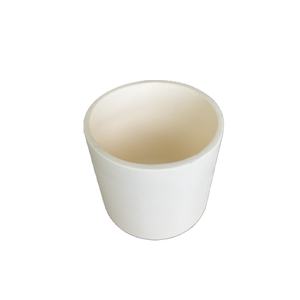
Limitations and Practical Boundaries
Boron carbide crucibles are not universal solutions. As a ceramic, boron carbide can be brittle, so it may be susceptible to mechanical shock or thermal shock under certain conditions. Careful handling and controlled heating and cooling rates are generally important to avoid cracking.
The neutron absorption behavior is also not unlimited. A crucible of a given size and composition will absorb neutrons according to its boron-10 content, density, and thickness. It does not absorb all neutrons, and it should not be treated as a complete shielding solution on its own. In many nuclear applications, boron carbide is used as part of a larger shielding or control system.
Chemical compatibility is another boundary. Boron carbide is chemically stable in many environments, but it can react with certain materials at high temperatures. The specific melt or process material should be evaluated for compatibility before use. These limitations are general and should be checked against the actual operating conditions.
FAQ: Boron Carbide Crucible for Neutron Absorption
Common questions about boron carbide crucibles for neutron absorption tend to focus on how the material works, what makes it suitable for nuclear use, and what limits its performance. The answers below summarize the general principles covered in this article.
Is boron carbide a good neutron absorber? Yes, boron carbide is widely used as a neutron absorber because boron-10 captures thermal neutrons efficiently. The exact performance depends on the amount of boron-10, the density of the material, and the thickness of the component.
Can a boron carbide crucible replace dedicated shielding? Not necessarily. A crucible can contribute to neutron absorption, but it is usually part of a broader shielding or control strategy. Its geometry and placement determine how much it helps in a given setup.
What should be considered when selecting one? Consider purity, density, boron-10 content, wall thickness, shape, thermal shock resistance, and chemical compatibility with the material being processed. These factors should be matched to the operating temperature and the neutron environment.
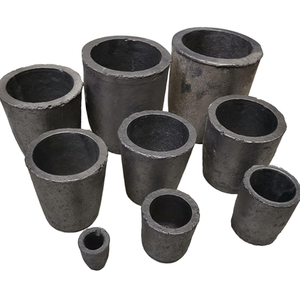
Frequently asked questions
What is a boron carbide crucible used for in nuclear applications?
It can be used as a high-temperature container and as a neutron-absorbing component. In nuclear settings, the boron carbide walls may help absorb neutrons, while the crucible itself holds materials during processing.
Why does boron carbide absorb neutrons?
Boron carbide contains boron, and the boron-10 isotope has a high probability of capturing thermal neutrons. When boron-10 absorbs a neutron, it undergoes a nuclear reaction that removes the neutron from the surrounding environment.
Does a boron carbide crucible provide complete neutron shielding?
No. A crucible can contribute to neutron absorption, but it is generally part of a larger shielding or control system. Its effectiveness depends on its boron-10 content, density, thickness, and placement.
What factors affect the performance of a boron carbide crucible?
Key factors include boron-10 content, material density, wall thickness, purity, shape, thermal shock resistance, and chemical compatibility with the material being processed.
.
